

Artificial Intelligence Law - Governance and Compliance
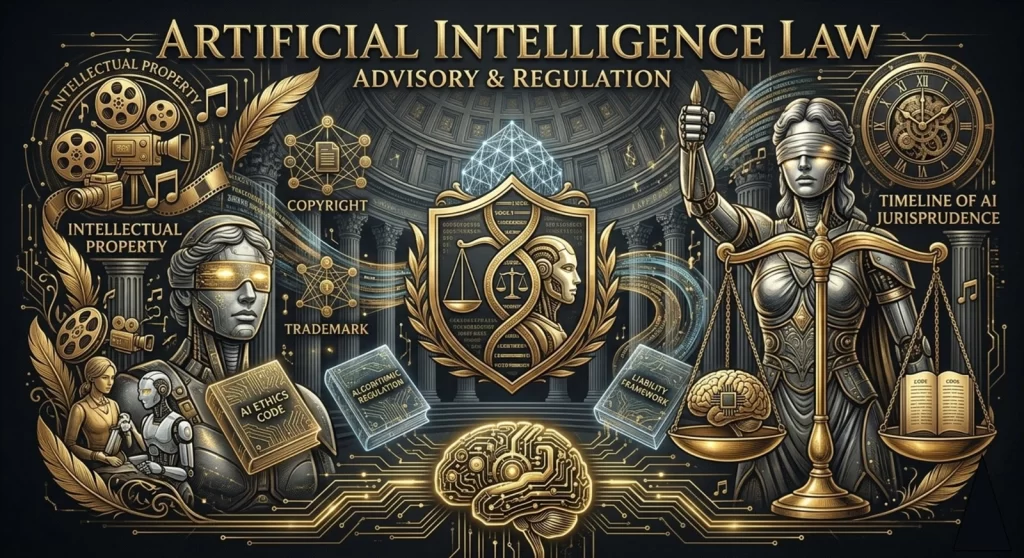
Infographic









AI Governance & Legal Advisory Services
As enterprises accelerate AI adoption across business operations, customer engagement, analytics, automation, and decision-making, legal, regulatory, and governance risks are evolving just as rapidly. At Sonia and Partners Law Firm, we help organizations build legally compliant, ethically aligned, and business-ready AI governance frameworks that enable innovation while reducing enterprise risk.
Our multidisciplinary approach combines legal expertise, technology understanding, governance strategy, compliance advisory, and responsible AI principles to support enterprises, startups, boards, GCCs, and technology-driven organizations navigating the AI era.
1. AI Legal Risk Assessment
We conduct comprehensive AI legal and enterprise risk assessments to identify regulatory exposure, liability risks, governance gaps, privacy concerns, intellectual property issues, discrimination risks, contractual vulnerabilities, and operational impact arising from AI deployment.
Our Services Include:
- AI system legal risk mapping
- AI liability and accountability assessment
- Privacy, data protection, and consent review
- Intellectual property and ownership analysis
- Bias, discrimination, and fairness risk evaluation
- AI deployment impact assessment
- Enterprise AI maturity evaluation
- AI policy and control gap analysis
Ideal For:
- Enterprises deploying generative AI
- GCCs and technology organizations
- Financial services, healthcare, HR, and regulated sectors
- Boards evaluating enterprise AI adoption
2. AI Governance Design
We help organizations establish scalable AI governance structures aligned with enterprise strategy, risk management, regulatory obligations, and responsible AI principles.
Our Services Include:
- Enterprise AI governance framework design
- AI oversight committee structuring
- AI accountability and responsibility matrix
- AI policy drafting and implementation
- AI lifecycle governance models
- AI decision-making escalation frameworks
- Internal AI usage governance
- AI governance operating model development
Key Outcomes:
- Clear governance accountability
- Structured AI oversight mechanisms
- Reduced operational and compliance risks
- Enterprise-ready AI governance maturity
3. AI Compliance Advisory
AI regulations are rapidly evolving across jurisdictions. We advise organizations on compliance readiness and implementation strategies aligned with emerging global AI regulations and standards.
Advisory Areas:
- EU AI Act readiness
- GDPR and privacy compliance
- India DPDP Act advisory
- ISO/IEC 42001 alignment
- NIST AI Risk Management Framework
- AI transparency obligations
- High-risk AI system compliance
- AI documentation and audit preparedness
We Support:
- Compliance gap assessments
- Regulatory readiness roadmaps
- AI compliance documentation
- Internal policy alignment
- Cross-border AI governance strategy
4. Responsible AI Assurance
Responsible AI is now a business, legal, and reputational imperative. We help organizations establish practical safeguards that ensure AI systems remain transparent, fair, explainable, accountable, and human-centric.
Our Responsible AI Services:
- Responsible AI framework development
- AI ethics and fairness reviews
- Human oversight controls
- AI explainability assessments
- AI transparency governance
- Bias mitigation strategy
- AI accountability assurance
- Internal Responsible AI policies
Business Benefits:
- Enhanced stakeholder trust
- Reduced reputational risk
- Improved regulatory preparedness
- Ethical AI deployment confidence
5. AI Vendor Governance
Third-party AI tools, SaaS platforms, foundation models, and AI vendors can introduce significant legal and operational risk. We help organizations establish robust AI vendor governance and procurement oversight mechanisms.
Our Services Include:
- AI vendor due diligence
- AI procurement risk review
- AI contract review and negotiation
- Third-party AI risk assessment
- Data sharing and IP protection review
- AI service liability analysis
- Vendor accountability framework
- AI outsourcing governance
Focus Areas:
- Confidentiality and data protection
- Model ownership and IP rights
- Indemnity and liability allocation
- Regulatory accountability
- AI performance obligations
6. Ethical AI Consulting
We advise organizations on embedding ethical AI principles into business strategy, governance, product design, and operational decision-making.
Ethical AI Advisory Includes:
- Ethical AI policy creation
- Human rights impact considerations
- Fairness and inclusivity principles
- Ethical AI governance workshops
- AI ethics review mechanisms
- Responsible innovation strategy
- Trust-centered AI governance
- Ethical risk mitigation planning
Designed For:
- AI product companies
- Enterprises deploying customer-facing AI
- HR technology and analytics platforms
- Public sector and social impact organizations
7. Startup AI Governance
AI startups often face investor scrutiny, regulatory uncertainty, data governance challenges, and scaling risks. We help AI startups establish governance credibility and compliance readiness from an early stage.
Startup Advisory Services:
- AI governance foundations
- AI governance foundations
- Founder risk advisory
- AI policy documentation
- Investor and due diligence readiness
- AI terms of use and disclosures
- Product risk governance
- AI commercialization advisory
Benefits for Startups:
- Improved investor confidence
- Reduced future compliance burden
- Stronger enterprise customer trust
- Scalable governance architecture
8. AI Litigation Readiness
As AI-related disputes increase globally, organizations must prepare for regulatory investigations, contractual disputes, data claims, algorithmic bias allegations, and AI accountability challenges.
Our Litigation Readiness Services:
- AI evidence preservation strategy
- AI audit trail assessment
- Governance defensibility review
- Regulatory response preparedness
- AI dispute risk analysis
- Internal investigation support
- AI accountability documentation
- AI incident response governance
We Help Organizations:
- Strengthen legal defensibility
- Improve audit readiness
- Reduce litigation exposure
- Prepare for regulatory scrutiny
9. Board AI Advisory
Boards and senior leadership teams increasingly require strategic oversight of enterprise AI adoption, governance, and risk management. We provide independent AI governance and legal advisory support to boards, CXOs, and leadership teams.
Advisory Areas:
- Board-level AI governance strategy
- Enterprise AI risk oversight
- AI adoption governance planning
- Regulatory and reputational risk briefing
- AI accountability structures
- AI governance reporting mechanisms
- Responsible AI leadership guidance
- AI risk governance workshops
Executive Focus:
- Strategic AI governance
- Enterprise resilience
- Regulatory preparedness
- Responsible innovation leadership
10. Agentic AI Governance
Agentic AI systems and autonomous AI agents introduce new governance, accountability, operational, and legal risks due to increased autonomy and decision-making capability.
We help organizations establish governance frameworks for emerging autonomous and agentic AI ecosystems.
Our Services Include:
- Agentic AI governance frameworks
- Autonomous decision accountability mapping
- AI agent risk assessment
- Human-in-the-loop governance controls
- Multi-agent system governance
- AI autonomy boundary definition
- AI operational safeguards
- Agentic AI compliance and oversight
Emerging Risk Areas:
- Autonomous execution risks
- Unintended decision-making
- Escalation and oversight failures
- Security and misuse concerns
- Regulatory accountability gaps
Why Choose Us
At Sonia and Partners Law Firm, we combine legal expertise, enterprise governance understanding, technology insight, and strategic advisory capabilities to help organizations navigate AI adoption responsibly and confidently.
This practice vertical is led by Rajesh Mohandas, an award-winning Lawyer Technologist with over 24 years of experience spanning legal advisory, enterprise risk management, technology governance, compliance strategy, digital transformation, and responsible AI leadership. His multidisciplinary expertise enables organizations to bridge the gap between law, business, technology, governance, and emerging AI regulations.
Rajesh advises enterprises, startups, boards, GCCs, and leadership teams on building scalable AI governance frameworks, managing enterprise AI risks, strengthening regulatory preparedness, and implementing responsible AI practices aligned with evolving global standards and business realities coupled with proactive litigation preparation.
Recognized for his thought leadership in AI governance, enterprise risk, and legal innovation, he brings a practical, business-focused, and implementation-oriented approach to AI advisory engagements.
We Work With:
- Enterprises and GCCs
- AI startups and technology companies
- Boards and leadership teams
- Regulated sector organizations
- Digital transformation and innovation teams
Our Approach
Our approach is practical, business-focused, risk-aware, and aligned with emerging global AI governance expectations. We help organizations enable innovation responsibly while strengthening trust, compliance, accountability, and operational resilience in the age of AI.
Speak With Our AI Governance Advisory Team
Whether you are deploying AI internally, building AI-powered products, engaging third-party AI vendors, or establishing enterprise AI governance structures, our team can help you navigate legal, regulatory, ethical, and operational AI risks with confidence.
Contact Sonia and Partners Law Firm to discuss your AI governance, compliance, and legal advisory requirements.
ARE YOU LOOKING FOR GUIDANCE AND SUPPORT WITH RESPECT TO YOUR PROPERTY?
CONSULT NOW – HELP IS JUST A CALL AWAY
Frequently Asked Questions (FAQs) – AI Governance, Compliance & Legal Advisory
1. What is AI governance and why is it important for businesses?
AI governance refers to the policies, frameworks, controls, and oversight mechanisms used to manage artificial intelligence systems responsibly, legally, and ethically. Effective AI governance helps businesses reduce regulatory risk, improve accountability, ensure compliance, prevent bias, and build stakeholder trust while deploying AI technologies.
2. What is an AI Legal Risk Assessment?
An AI Legal Risk Assessment evaluates the legal, regulatory, operational, and reputational risks associated with the use of artificial intelligence within an organization. This includes reviewing AI systems for privacy risks, liability exposure, intellectual property concerns, compliance obligations, bias risks, vendor risks, and governance gaps.
3. Does my company need an AI governance framework?
Yes. Any organization using generative AI, machine learning, automation, AI analytics, AI agents, or customer-facing AI tools should establish an AI governance framework. A structured governance model helps ensure responsible AI adoption, regulatory compliance, operational accountability, and enterprise risk management.
4. How can businesses prepare for the EU AI Act?
Businesses can prepare for the EU AI Act by conducting AI risk assessments, classifying AI systems based on risk categories, implementing governance controls, documenting AI processes, ensuring transparency measures, and establishing compliance monitoring frameworks. Organizations operating globally should proactively align with emerging international AI regulations.
5. What are the legal risks of using Generative AI tools in enterprises?/strong>
Generative AI tools can create legal risks related to data privacy, intellectual property infringement, confidentiality breaches, inaccurate outputs, algorithmic bias, cybersecurity exposure, regulatory non-compliance, and contractual liabilities. Enterprises should implement AI usage policies, governance controls, and vendor due diligence processes before deployment.
6. What is Responsible AI?
Responsible AI refers to the ethical and accountable development and deployment of artificial intelligence systems that are fair, transparent, explainable, secure, human-centric, and compliant with applicable laws and governance standards. Responsible AI practices help organizations reduce risk and improve trust.
7. Why is AI compliance becoming important for companies?
Governments and regulators worldwide are introducing AI regulations focused on accountability, transparency, privacy, fairness, and risk management. AI compliance helps organizations avoid legal penalties, regulatory investigations, reputational damage, and operational disruptions while strengthening enterprise trust and governance maturity.
8. What industries require AI governance advisory services?
AI governance advisory services are important across industries including banking, financial services, healthcare, insurance, retail, HR technology, education, manufacturing, telecom, e-commerce, SaaS, GCCs, and technology companies. Regulated industries face particularly high compliance and accountability obligations.
9. What is AI Vendor Governance?
AI Vendor Governance involves assessing and managing the legal, operational, compliance, and security risks associated with third-party AI vendors, AI SaaS platforms, AI tools, and foundation model providers. This includes AI contract review, due diligence, data governance, liability analysis, and vendor accountability controls.
10. What should boards and CXOs know about AI governance?
Boards and CXOs should understand enterprise AI risks, regulatory obligations, accountability structures, ethical considerations, operational controls, and governance responsibilities related to AI deployment. Board-level AI oversight is becoming a critical component of enterprise risk management and corporate governance.
11. What is Agentic AI Governance?
Agentic AI Governance refers to the oversight, accountability, and control mechanisms established for autonomous AI agents and AI systems capable of independent decision-making or task execution. It focuses on managing risks associated with autonomy, human oversight, escalation controls, and operational accountability.
12. Can startups benefit from AI governance advisory services?
Yes. AI startups benefit significantly from early-stage governance and compliance advisory. Strong AI governance helps startups improve investor confidence, strengthen enterprise customer trust, reduce future legal exposure, and prepare for scaling, due diligence, and regulatory requirements.
13. What are the biggest AI compliance challenges organizations face?
Common AI compliance challenges include lack of governance policies, unclear accountability, insufficient documentation, data privacy concerns, AI bias risks, vendor governance gaps, regulatory uncertainty, absence of audit trails, and inadequate oversight of AI deployment across business functions.
14. How can companies reduce AI-related litigation risks?
Organizations can reduce AI litigation risks by implementing governance frameworks, maintaining audit trails, documenting AI decisions, conducting legal risk assessments, establishing oversight controls, ensuring compliance readiness, reviewing AI vendor contracts, and creating incident response protocols for AI-related disputes.
15. What is the difference between AI governance and AI compliance?
AI governance focuses on the overall framework, oversight, accountability, policies, and risk management structure for AI systems. AI compliance specifically addresses adherence to laws, regulations, standards, and regulatory obligations related to AI deployment and usage.
16. How does AI governance support enterprise risk management?
AI governance strengthens enterprise risk management by identifying, assessing, monitoring, and mitigating risks arising from AI systems. It helps organizations manage operational, regulatory, reputational, cybersecurity, ethical, and legal risks associated with artificial intelligence adoption.
17. Why is ethical AI important for enterprises?
Ethical AI helps organizations ensure fairness, transparency, accountability, inclusivity, and human-centric decision-making in AI systems. Ethical AI practices reduce reputational risk, improve customer trust, support regulatory readiness, and strengthen responsible innovation initiatives.
18. What are AI governance best practices for organizations?
AI governance best practices include establishing AI policies, defining accountability structures, conducting AI risk assessments, implementing oversight controls, monitoring AI systems, maintaining documentation, managing vendor risks, ensuring transparency, and aligning with frameworks such as ISO 42001 and NIST AI RMF.
19. Who should lead AI governance within an organization?
AI governance should involve cross-functional leadership including legal, compliance, risk management, cybersecurity, data governance, technology, HR, procurement, and executive leadership teams. Many organizations also establish dedicated AI governance committees or responsible AI oversight groups.
20. Why choose Sonia and Partners Law Firm for AI governance and legal advisory?
Sonia and Partners Law Firm provides multidisciplinary AI governance, compliance, legal risk, and responsible AI advisory services for enterprises, startups, boards, and technology organizations. The practice is led by Rajesh Mohandas, an award-winning Lawyer Technologist with over 24 years of experience in legal advisory, enterprise governance, risk management, compliance strategy, and technology leadership.
